


The Practical Guide to Selecting Slewing Bearings for Truck-Mounted Cranes

We are always ready for you.
The Practical Guide to Selecting Slewing Bearings for Truck-Mounted Cranes
June 2026 | Anhui Yuanfeng Slewing Bearing Co., Ltd.
Truck-Mounted Cranes (TMC) represent one of the most typical applications for slewing bearings. Their operating conditions are distinctive: intermittent heavy loading, side-pull impact from the boom, outdoor dust and moisture environments, and sudden rotation after long periods of idling. The consequences of improper selection—raceway pitting, gear wear, and downtime for repairs—translate into significant time and financial costs for crane operators.
Our company specializes in manufacturing slewing bearings for TMCs from 3-ton to 200-ton capacities. Below is the practical selection framework we use when working with OEM customers.
1. Define the Actual Load Spectrum
Many buyers select bearings based on boom length alone—this is far from sufficient. The correct approach is to calculate the combined load acting on the slewing bearing under the worst-case operating condition:
- Axial Force (Fa): The combined self-weight of the load, boom, and hook, acting vertically downward.
- Radial Force (Fr): The horizontal force generated by eccentric side-pull or wind load on the boom.
- Overturning Moment (M): The most critical parameter for TMCs. Calculation formula: load weight × horizontal distance from the lifting point to the slewing centerline.
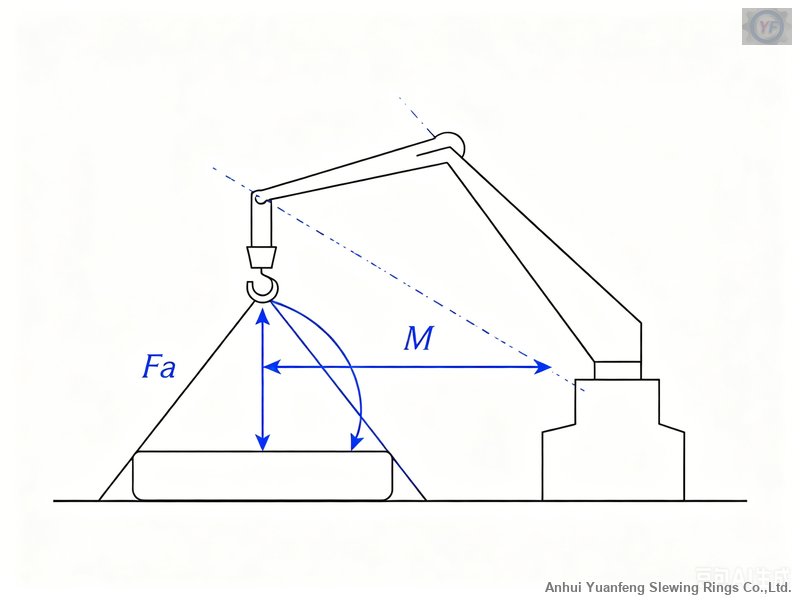
Selection Principle: For TMCs below 200-ton capacity, the static safety factor (S₀) should not be lower than 1.3. If the operating conditions involve frequent full-radius lifting or impact loads (such as grab operations), S₀ ≥ 1.5 is recommended.
2. Choosing the Right Raceway Structure
Different raceway structures vary significantly in their ability to handle combined loads. Two main structures are used in the TMC sector:
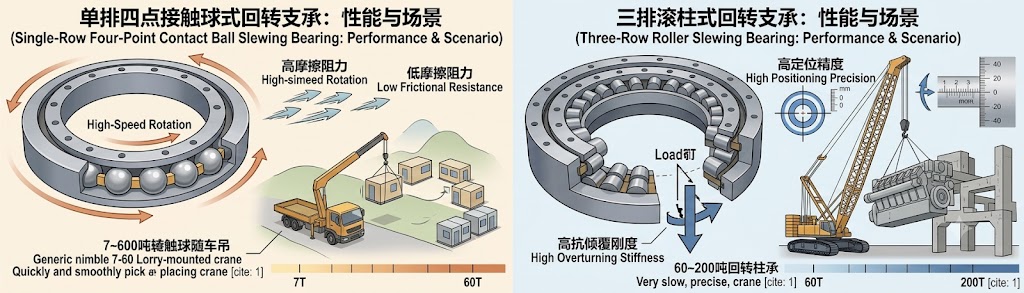
| Parameter | Single-Row Four-Point Contact Ball | Three-Row Roller |
|---|---|---|
| Load Characteristics | Excellent axial load capacity, moderate overturning moment resistance | Higher overturning stiffness |
| Rotation Performance | Low friction, smooth rotation | Higher friction, better positioning accuracy |
| Applicable Capacity | 7T–60T general-purpose TMCs | 60T–200T heavy-duty or precision lifting |
| Cost | Economical | 15–30% higher |
Our Recommendation: If the slewing speed of the truck-mounted crane is ≤ 2 rpm and lifting capacity is prioritized over slewing speed, the Single-Row Four-Point Contact Ball is the most cost-effective choice. If the operating conditions require precise positioning or involve a significant overturning moment, the premium for the Three-Row Roller is well worth it.
3. Gear Parameters Should Not Be Overlooked
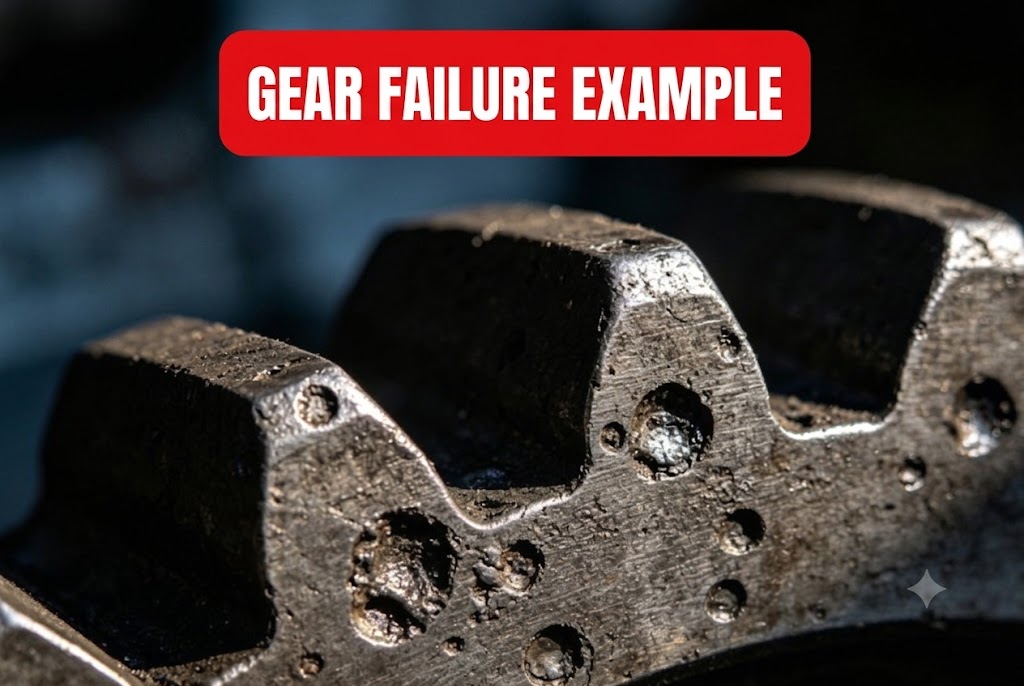
In TMC applications, the gear of an externally-toothed slewing bearing is often the first failure point. Causes include: meshing misalignment due to chassis deformation, contaminant ingress on open gear flanks, and pitting from frequent start-stop cycles.
- Raceway Hardness: 50–60 HRC (induction hardened)
- Precision Grade: P0 per JB/T 2300 Standard
- Backlash Control: 0.03–0.05 × module (accommodates deformation without seizure)
Sealing & Corrosion Protection:
- Standard NBR seals as standard; FKM (fluoroelastomer) seals recommended for coastal or cold-climate applications
- Gears can be treated with zinc/copper spray for corrosion protection
- Raceway Material: 50Mn, integral quenching & tempering + raceway surface hardening. Never use plain carbon steel rings.
4. Installation Standards Determine Actual Service Life
Correct selection with improper installation renders all prior work useless:
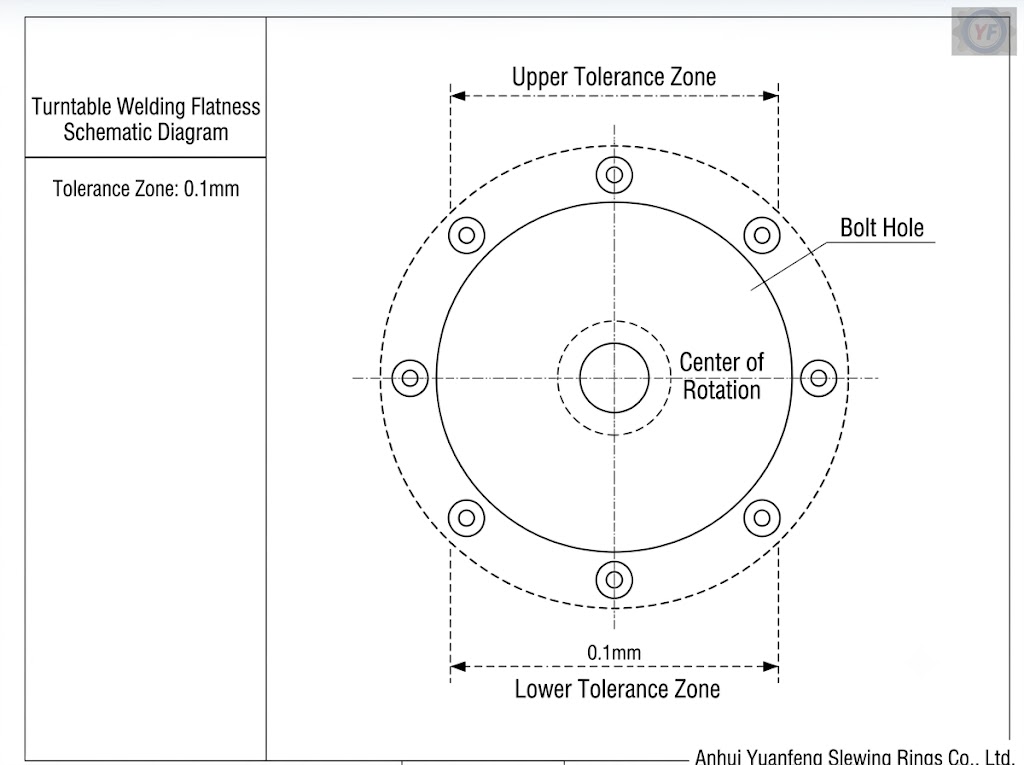
- Mounting Surface Flatness: Must be controlled within 0.1 mm across the bolt pitch circle. Poor welded subframe preparation leads to uneven load distribution and accelerated raceway damage.
- Bolt Pre-Tensioning: Tighten symmetrically to specified torque values; use of a torque wrench is recommended.
- Lubrication: EP2 lithium-based grease with MoS₂ additive is recommended. Replenish every 50–100 operating hours under normal conditions; shorten the interval in dusty environments.
Why Do OEMs Choose Anhui Yuanfeng?
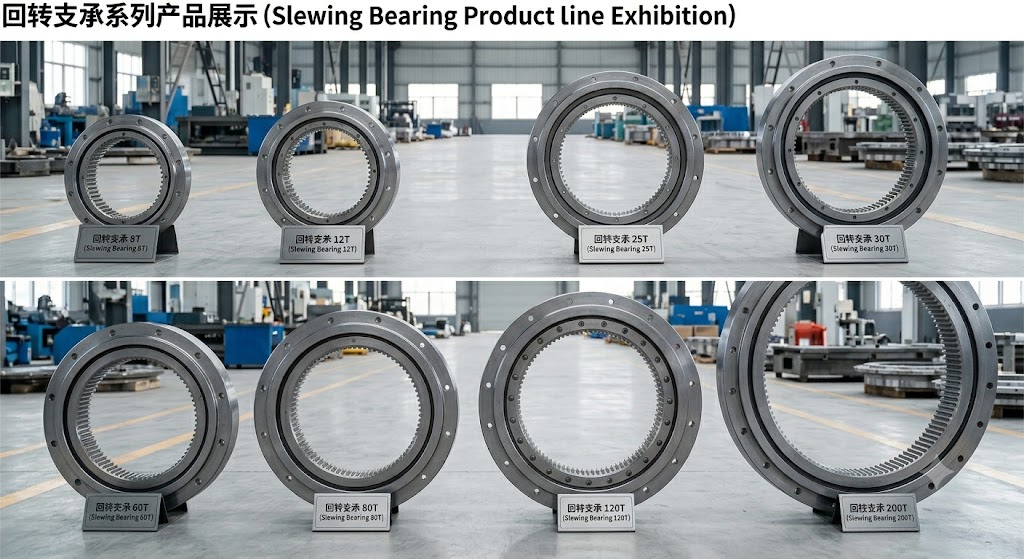
- Application-Oriented Engineering: We don’t sell catalog parts. Every bearing comes with a selection report based on the customer’s actual load spectrum, duty cycle, and gear ratio.
- 3–200-Ton TMC Proven: Our slewing bearings are in service across TMC fleets in Southeast Asia, Russia, the Middle East, and other markets.
- In-House Heat Treatment: Gear raceway hardness and core toughness are quality-checked for every batch.
- Fast Custom Delivery: Standard series: 20–25 days; custom dimensions: 30–45 days.
Need to select a slewing bearing for your TMC? Provide the following parameters and our engineering team will return a selection proposal and load capacity certificate within 24 hours:
- Maximum lifting capacity and working radius
- Slewing speed (rpm)
- Installation envelope constraints (OD × ID × height)
- Gear module and number of teeth (if replacing an existing bearing)
www.ahyfeng.com